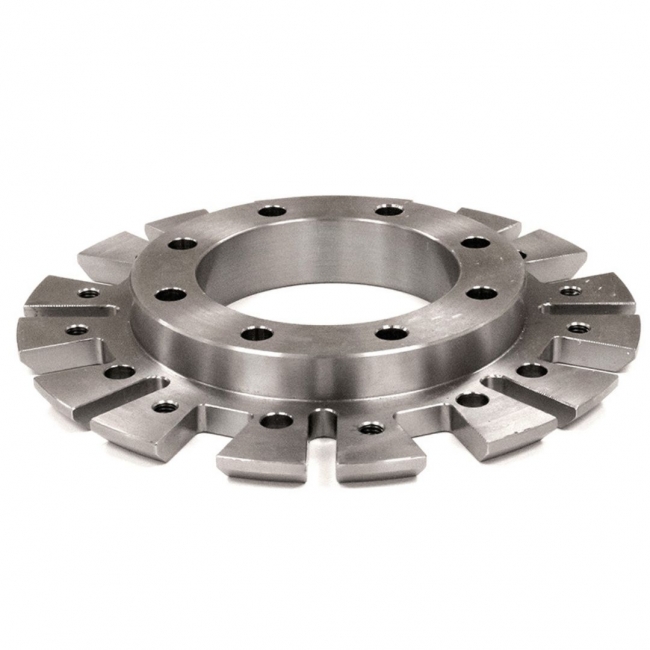
Tight tolerances, a fundamental principle of precision machining used in metal fabrication, refer to the allowable variation or deviation in the dimensions of a particular part during fabrication. Why does it play such an important role in metal fabrication? In this blog, RWD Tool & Machine Ltd., a leading CNC machine shop in Vaughan, Ontario, explores 4 key facets of tight tolerances in metal fabrication.
Precision machining is key to achieving extremely tight tolerances in metal fabrication, as some parts are essential from a safety and functionality perspective. In sectors such as aerospace and healthcare, the smallest of deviations can compromise these features. Hence, tight tolerances and precision machining become the norm for these sectors.
When a particular part is worn or damaged, it needs to be promptly replaced. The part replacing it needs to fit the exact specifications, or at least be as close to them as possible. Tight tolerances become key here as they help in manufacturing accurate parts on a large scale for commercial applications.
Precision machining and tight tolerances ensure that a particular part is fabricated with minimal wastage. This makes the process much more efficient and cost-effective.
Manufacturing parts with very tight tolerances also shows a commitment to quality. Only high-quality metal fabricators are able to achieve this level of precision. Hence, close tolerances help manufacturers choose the right and reputable fabricators.
To summarize, tight tolerances are a key facet of metal fabrication as they offer safety, reliability, effective large-scale production, reduce material wastage and ensure quality control.
RWD Tool & Machine Ltd. is a reputed CNC machine shop and provider of metal fabrication services in Vaughan. Our services also extend to CNC precision machining. Contact us today for all your metal fabrication, assembly, and precision CNC machining requirements.
Examples of precision machining processes include CNC-powered milling, turning, grinding, drilling, and EDM.
Yes, precision machining can be more expensive than regular fabrication. Hence, it is reserved for applications where high precision is required.