The two main types of cutting processes used in metal fabrication are rolling and turning. In rolling, milling emerges as one of the most popular forms. Similarly, for turning, the lathe is considered the most common choice. In this blog, RWD Tool & Machine Ltd., a leading CNC machine shop in Vaughan, Ontario, offering metal fabrication and precision machining, explores milling and turning processes in detail.
In milling, the cutting tool is rotating or rolling as it is mounted on a spindle. Known as a milling machine, the cutting tool then comes in contact with a stationary workpiece, thereby cutting or removing parts from the workpiece at intervals. This is a highly versatile cutting process wherein the tool can perform flat cuts, curves or even grooves on the surface of the workpiece.
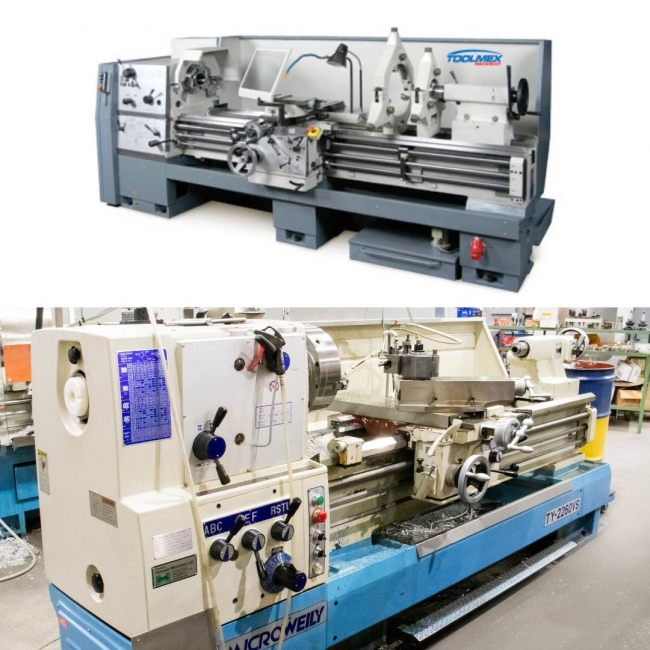
In many ways, the lathe process can be considered the opposite of the milling process. Here, instead of a stationary workpiece, the cutting tool attached to the spindle is stationary. The workpiece is rotating in this case, and as it comes into contact with the stationary cutting tool, parts of it are removed effectively. The lathe process can be used in metal fabrication to remove material from the periphery of a cylindrical workpiece, or can be used to create a taper, drill a hole, enlarge the hole by boring or even threading.
In closing, rolling and turning are two primary processes used in metal fabrication and precision machining. In the case of the former, the workpiece is stationary, and the cutting tool is rotating, whereas in the latter, the cutting tool is stationary and the workpiece is rotating.
RWD Tool & Machine Ltd. is a reputed CNC machine shop and provider of metal fabrication services in Vaughan. Our services also extend to CNC precision machining. Contact us today for all your metal fabrication, assembly, and precision CNC machining requirements.
The most common types of milling machine processes include general milling, CNC milling and machining center or multi-functional CNC milling.
A CNC lathe uses computer programming to automate the cutting process, making it faster and highly accurate.